



What is a personal pension?
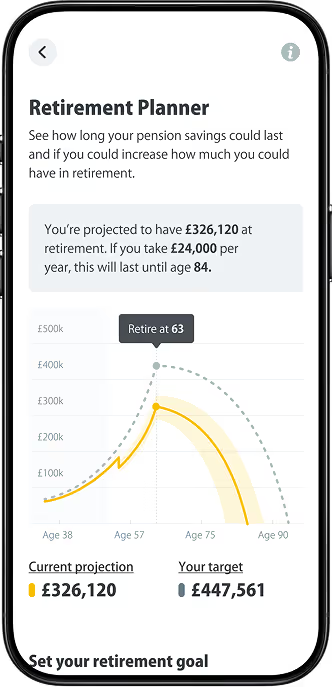
A personal pension - also called a private pension - is a saving product that you can set up yourself to save money for your retirement. The value when you retire will depend on how much you’ve paid into it and how your investments perform.
How personal pensions work
While a workplace pension is set up by your employer, you can choose and set up a personal pension yourself.
When you start a personal pension you will usually be given a choice of pension funds. Pension funds are managed by professional money managers, who will invest your pension savings in a range of assets.
Once you’ve chosen a plan you can begin making regular contributions and one-off payments. Your pension provider will claim tax relief from the government and add it to your pension plan.
When you retire, as long as you’re at least 55 years old (rising to 57 from 2028) you have a few options for what to do with the money in your personal pension. You can find out about these on this page about cashing in your pension.
The pension plans offered by PensionBee are all personal pensions that you can manage online.
Tax relief on personal pensions
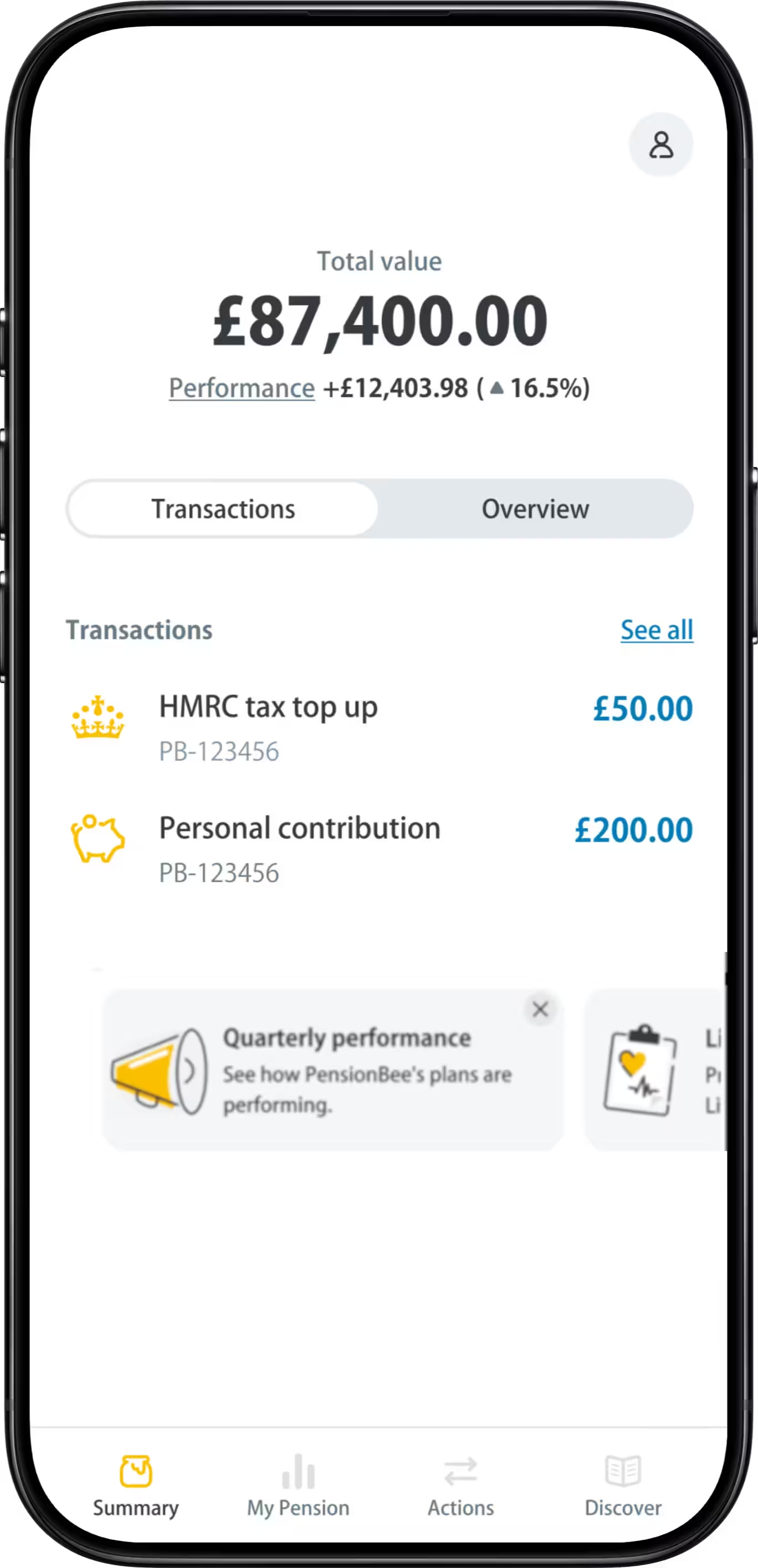
When you pay into a personal pension, also called a private pension, your pension provider will claim tax relief on your behalf and add it to your pot. At PensionBee, we’ll add your 25% tax top up to your balance automatically.
For example, if you pay £100 into your pension, you get an extra £25 as tax relief, so a total of £125 is invested in your pension.
If you’re a higher rate taxpayer, you can then claim an additional 25% tax top up via your tax return, or 31% if you’re a top rate taxpayer. For _current_tax_year_yyyy_yy you get this tax relief up to 100% of your salary or _annual_allowance, depending on which is lower.
For more information about making pension contributions and receiving tax relief, see our page on making pension contributions.
{{main-cta}}
Who needs a personal pension?
Personal and workplace pensions can supplement any income you may receive from the State Pension. This is currently a maximum of just _state_pension_annually a year (_current_tax_year_yyyy_yy).
Under Auto-Enrolment, employers are required to provide a workplace pension scheme for their employees and pay employer contributions, effectively adding money to your pot for free. This means that it’s generally a good idea to take up a workplace pension.
However, you may decide to save into both a personal and a workplace pension. And if you don’t have a workplace pension - perhaps because you’ve opted out or you’re self-employed - then setting up a personal pension could be a particularly good idea.
PensionBee personal pensions
PensionBee can help you combine your old pensions into one personal pension plan that you can manage online. Your employer can also choose to pay into your PensionBee plan. Sign up to PensionBee.
Risk warning
As always with investments, your capital is at risk. The value of your investment can go down as well as up, and you may get back less than you invest. This information should not be regarded as financial advice.
Last edited: 12-05-2026
.webp)