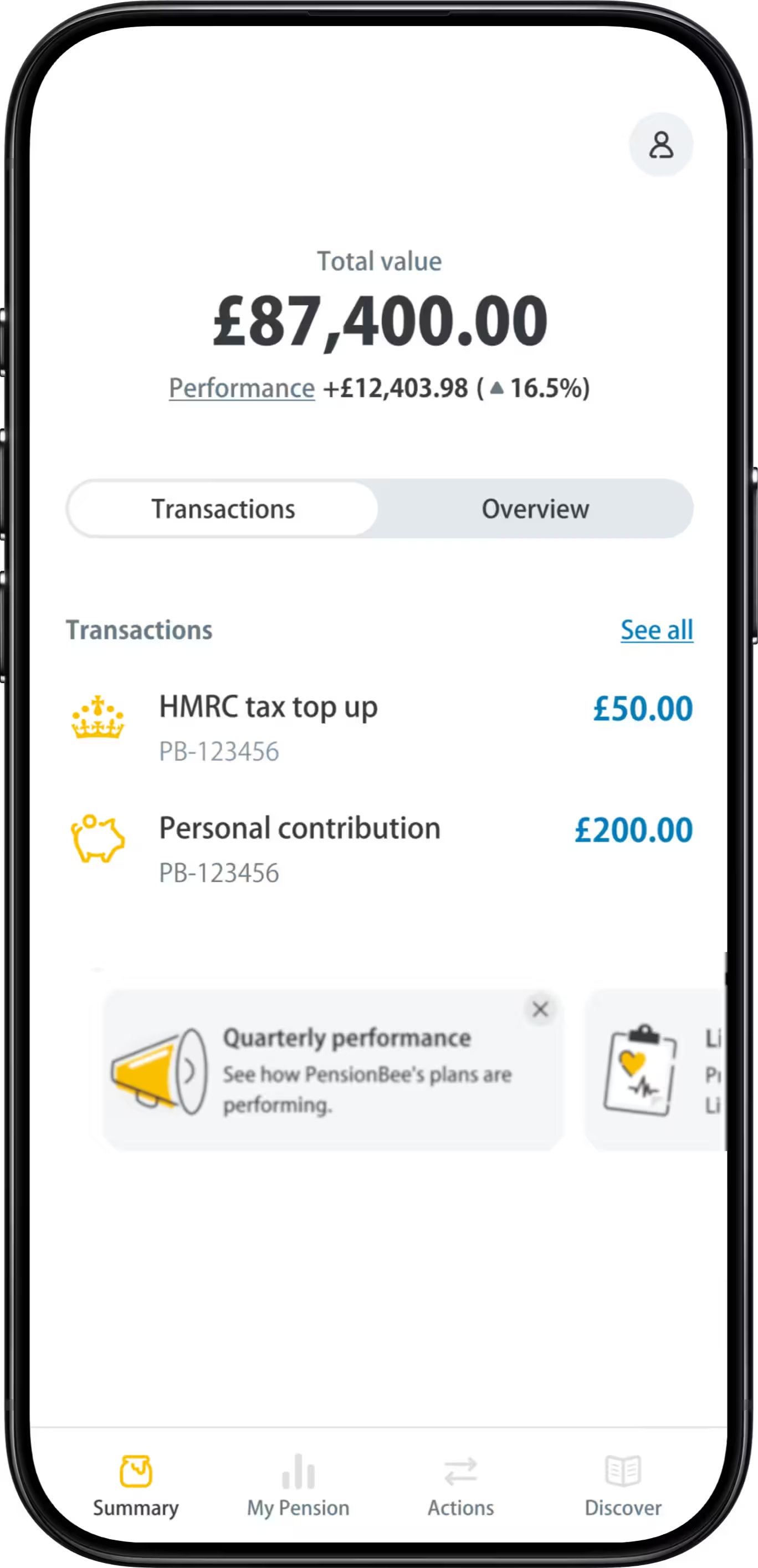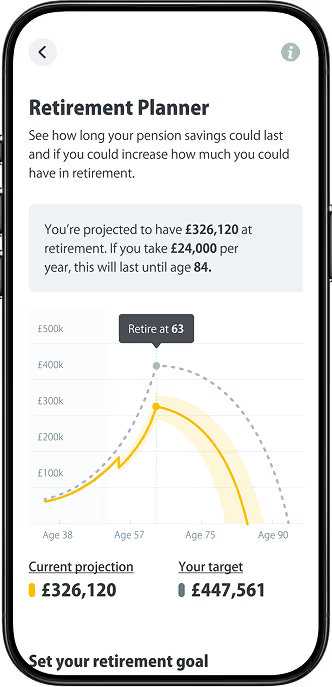




Sign up to our flexible pension plan for the self-employed and contribute as much or as little as you like, as often as you like.
How to open a SIPP
To open a Self-Invested Personal Pension (SIPP), you need to:
- choose a provider;
- complete an application to open an account, usually online; and
- pay into your account, using a lump sum, regular contributions, or a transfer from a previous pension.
Typically, any UK resident under 75 can open a SIPP. Most providers are available online, and you can open an account in a few minutes.
You then have flexibility and choice over how your money’s invested. You can receive tax relief from the government on your contributions, too.
In this guide, find out how to open a SIPP, including who can open one, and what you need to know before you do.
Who can open a SIPP?
SIPPs are a type of personal pension where you choose and manage the investments for your retirement savings.
This isn’t how most other modern pensions work. Typically, you pick an investment plan or fund, or stick with your provider’s default. But with a SIPP, you can choose individual investments.
So, you have more control and flexibility over how your retirement savings are invested.
SIPPs are generally more suitable for knowledgeable or experienced investors, as you need to be able to make sensible investment decisions. Making mistakes with your SIPP investments could affect how much you have at retirement.
If you’re a UK resident and under 75, you can usually open a SIPP. You may also be able to open a SIPP if you’re not UK-based but you must meet your chosen provider’s residency rules.
If you’re over 75, you can’t usually open a new SIPP. However, you may be able to transfer existing pensions into a SIPP, and you can still make contributions. Note that you normally won’t receive tax relief on those contributions.
There’s no minimum age to open a SIPP, either. Parents or guardians could open a Junior SIPP for a child.
Your employment status doesn’t affect whether you can open a SIPP. Self-employed workers, sole traders, contractors, and company directors can all open SIPPs.
If you fall into one of these categories, you usually won’t benefit from Auto-Enrolment. Under these rules, most eligible employed workers who earn at least _earnings_trigger are automatically enrolled into a workplace pension scheme by their employer. Self-employed individuals aren’t included in this.
This can make a SIPP useful for you. You can also open a personal pension, such as the PensionBee pension. With this type, you’ll usually pick an investment plan, rather than choosing investments yourself. This can make it easier to manage than a SIPP.
What you'll need to open a SIPP
To complete a SIPP application, you’ll usually need:
- your National Insurance (NI) number;
- proof of identity and address (your provider usually checks this electronically);
- payment details to make your first contribution; and
- details of any pensions you'd like to transfer in (such as the provider name and your policy number).
{{dark-cta}}
How to open a SIPP, step-by-step
Follow these five steps to help you set up a SIPP.
1. Make sure a SIPP’s right for you
SIPPs offer control over your pension investments. However, that means you’ll be responsible for how your retirement savings are invested. Mistakes could prove costly, so you’ll need the knowledge and confidence to invest for your future. If you’re unsure, you may want to consider a personal or private pension.
2. Compare and pick a SIPP provider
SIPP providers differ across things like fees (including platform charges and dealing costs), investment offering, quality of their website or app, and customer service support. Compare any providers you’re thinking about to find the right one for you.
3. Complete your application
It usually takes a few minutes to complete a SIPP application and most providers allow you to do this online.
4. Make a contribution
You can set up a regular contribution, make a lump sum payment, or transfer existing pensions into your pot. Most people receive basic rate tax relief on their contributions, giving them a 25% tax top up (subject to certain limits). For example, an £800 contribution would be bumped up to £1,000. Higher and additional rate taxpayers can claim further tax relief, usually through Self-Assessment or a tax code change.
5. Choose your investments
It’ll depend on what your provider offers, but you can usually pick from shares, funds, ready-made investments and more. Make sure whatever you choose lines up with your goals and risk tolerance.
How much do you need to open a SIPP?
Some providers allow you to open a SIPP with no minimum. Meanwhile, others might ask for a regular contribution or opening lump sum. Check with the provider you’re looking at before you open your SIPP.
It’s also worth keeping the pension annual allowance in mind. That’s the limit on the gross amount that can be saved into a pension each tax year without incurring tax charges.
The current standard annual allowance for pension contributions is _annual_allowance (_current_tax_year_yyyy_yy) - this includes personal, employer and any third party contributions.
You can save up to _annual_allowance per year (_current_tax_year_yyyy_yy) into a pension while still receiving tax relief on any personal and third party contributions. Tax relief isn’t applied to employer contributions.
There’s a separate limit on tax relief. You can receive tax relief on personal and third party contributions up to 100% of your salary, capped at _annual_allowance per year (_current_tax_year_yyyy_yy).
How to start a SIPP if you're self-employed
Self-employed individuals can open a SIPP like anyone else. Follow the steps above once you’ve found the right SIPP for you as a self-employed worker.
Plus, self-employed income can be uneven. As a result, choosing a SIPP you can pay into flexibly can help, topping up in high-income months and easing off when things are tighter.
How you contribute can depend on how your business is set up:
- Sole traders - make personal contributions and receive tax relief like employed workers do.
- Company directors - make personal contributions, but also have the ability to make employer contributions. These won’t receive tax relief but they can be an allowable business expense which may help to cut your Corporation Tax bill.
Can you transfer existing pensions into a SIPP?
Yes, and many people use a SIPP for this exact purpose. Having your pots in one place can mean less admin, while giving you one pension balance so you have a clearer picture of how much you’ve saved for retirement.
However, combining pots - also known as ‘consolidation’ - isn’t right for everyone. Before you move any savings, it’s worth checking for:
- exit or transfer fees on your existing pensions;
- any benefits you might lose, such as a guaranteed annuity rate; and
- what type of pension you have - for example, it’s often not recommended to transfer a defined benefit pension. If you have a defined benefit pension worth more than £30,000, you must take regulated advice from an Independent Financial Adviser (IFA).
When can you access a SIPP?
SIPPs are subject to the same access rules as most other defined contribution pensions.
You normally can’t access your pot until you reach the Normal Minimum Pension Age. In 2026/27, that’s 55, rising to 57 from 2028.
From then, you have options for how to access your fund. That includes:
- taking the first 25% tax-free;
- going into drawdown; and
- buying an annuity.
Risk warning
As always with investments, your capital is at risk. The value of your investment can go down as well as up, and you may get back less than you invest. This information should not be regarded as financial advice.
Last edited: XX-07-2026
Choose a self-employed pension that puts you in the driving seat
When investing, your capital is at risk